भगवद्गीता
Bhagavad Gītā
The Gītā as a practical philosophical text — verse by verse, through Sanskrit, meaning and application.

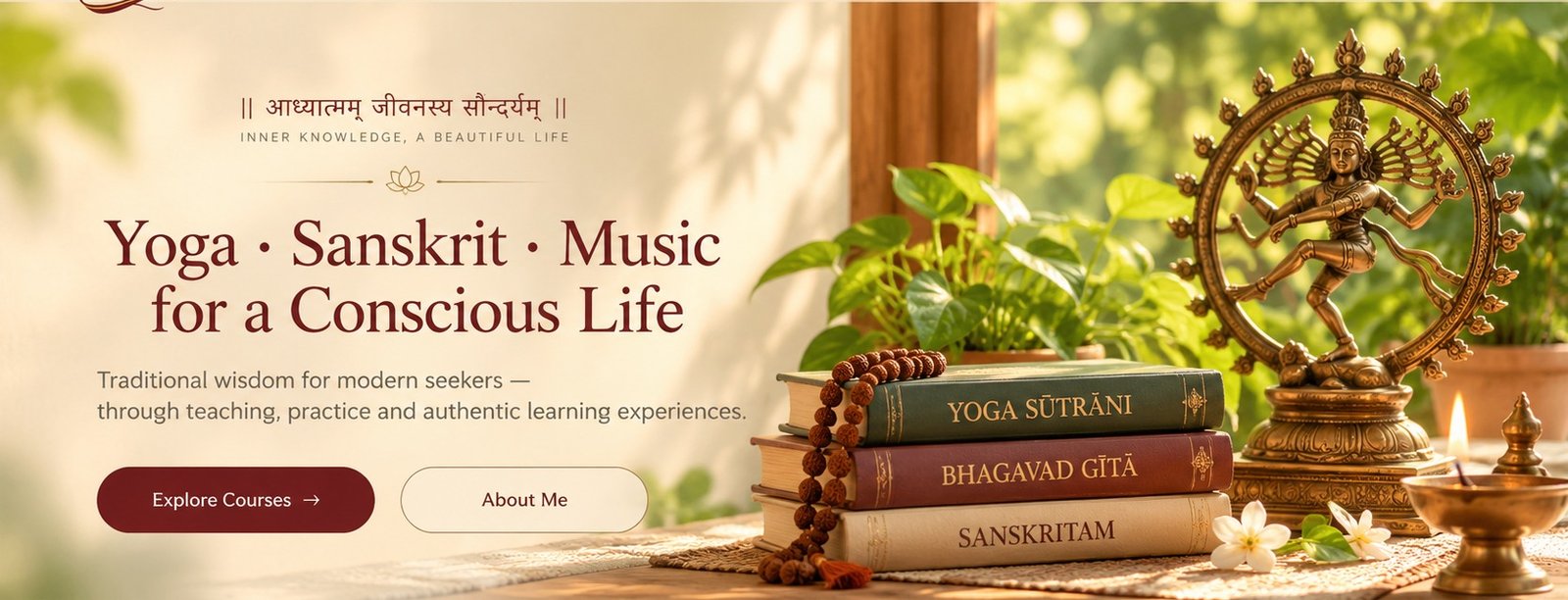
These subjects are usually taught apart. Here they are taught together, because in the tradition they were never separate.
संस्कृतम्
The language that carries the texts. From the Devanāgarī script to reading the Gītā and the Yoga Sūtras in the original.
दर्शनम्
Yoga Darśana, the Yoga Sūtras with the Vyāsa Bhāṣya, and the Bhagavad Gītā — as philosophy, not as decoration.
उपासना
Śikṣā — the science of correct recitation. Pronunciation, svara, mātrā, and a repertoire of Vedic and yogic chants.
नादः
Carnatic vocal music through Anāhata, and Nāda Yoga — sound as a path to inner awareness.
About
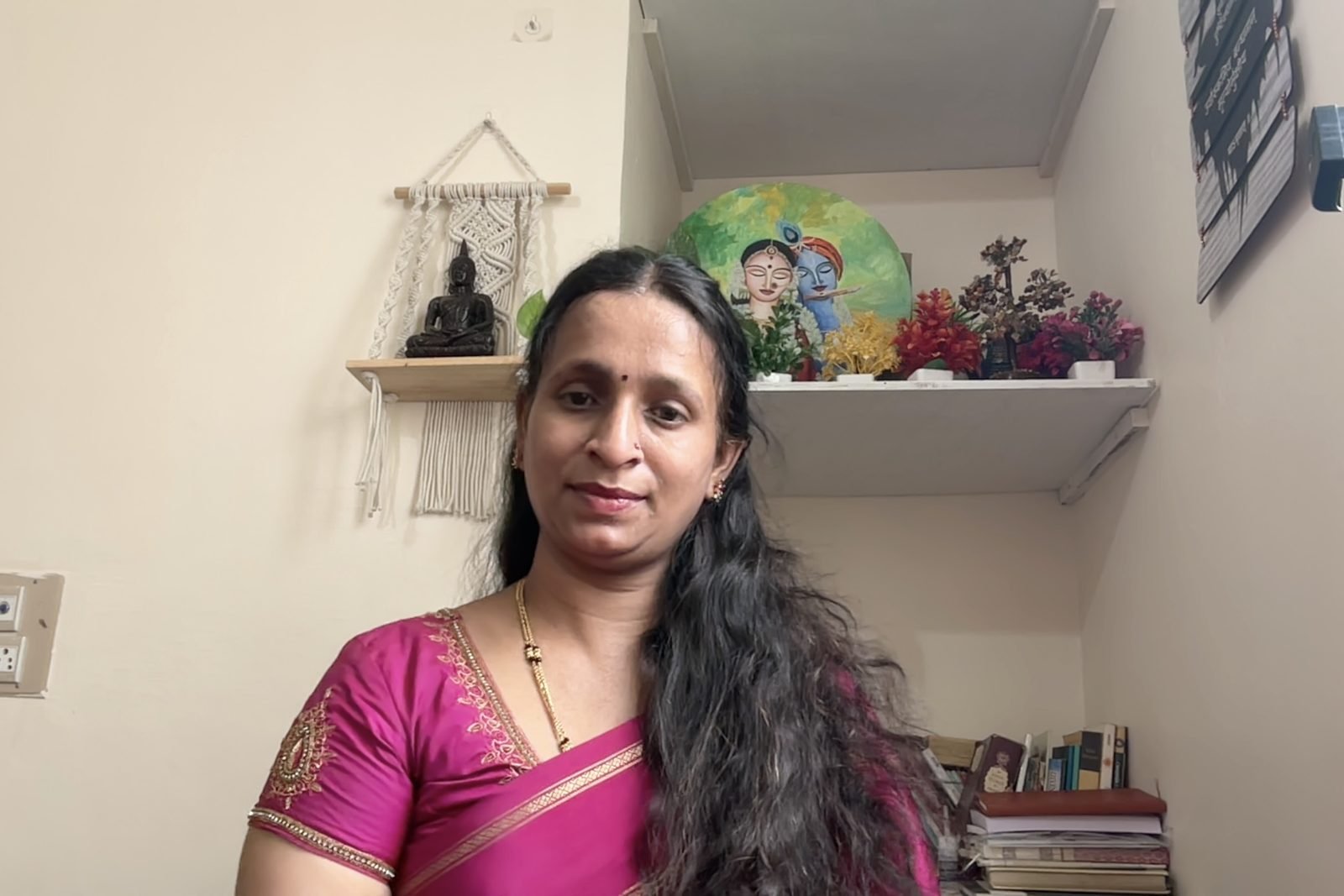
Sanskrit scholar, yoga philosopher, educator, Carnatic classical vocalist and Veena practitioner — dedicated to preserving, studying and sharing India's spiritual and intellectual traditions.
She holds an M.A. in Sanskrit with a Vidwath qualification specialising in Tarka Śāstra, a Master's degree in Carnatic classical vocal music, and senior-level training in Veena. She is KSET qualified and is completing doctoral research in Yoga Śāstra on the concept of Samādhi.
Her teaching rests on a simple conviction: that these are not subjects to be studied intellectually and set aside, but living traditions to be experienced — through study, contemplation, practice, sound and self-inquiry.
Eight areas of study, taught online in live classes, in small groups, with modules you can join one month at a time.
भगवद्गीता
The Gītā as a practical philosophical text — verse by verse, through Sanskrit, meaning and application.
पातञ्जलयोगसूत्राणि
Patañjali's sūtras studied with the Vyāsa Bhāṣya and the classical commentaries.
योगदर्शनम्
The philosophical foundations of Yoga — Sāṃkhya-Yoga, puruṣa and prakṛti, the guṇas, mokṣa.
संस्कृतम्
From the Devanāgarī script to reading original texts — basic, intermediate and advanced levels.
उपासना
Sanskrit phonetics, the rules of correct recitation, and a repertoire of Vedic and yogic chants.
नादयोगः
Sound as a path to inner awareness — nāda, mantra, breath, music and meditation together.
कीर्तनम्
Devotional singing bringing together Sanskrit, meaning and Indian musical tradition.
अनाहत
Systematic Carnatic vocal training through Anāhata — śruti, swara, rāga, tāla and voice culture.
Study the original texts, the language, the philosophy and the traditional teaching. Not a summary of a translation of a commentary — the thing itself.
Turn knowledge into practice, through chanting, meditation, music, contemplation and disciplined daily study.
Bring what the tradition holds into ordinary life. Authentic learning happens when knowledge becomes experience, and experience becomes transformation.
श्रवणम् → मननम् → निदिध्यासनम् → अनुभवः
śravaṇam → mananam → nididhyāsanam → anubhavaḥ
Listening · Reflection · Deep contemplation · Direct experience. The purpose of studying this material is not to accumulate information, but to move along that sequence.
"I had chanted these mantras for years without knowing I was mispronouncing half of them. The first two sessions changed how I hear everything."Yoga teacherBengaluru
"She teaches the Gītā as philosophy, with the Sanskrit right there on the page. I have never had a teacher be this precise and this warm at the same time."Student, Yoga Sūtras courseUnited Kingdom
"My daughter began Sanskrit with no background at all. Six months on she reads the script fluently and asks me what words mean at dinner."ParentMysuru
Whether you are entirely new to Sanskrit and Indian philosophy, or already have years of practice behind you, there is a way in. Send a message and we will find the right starting point together.